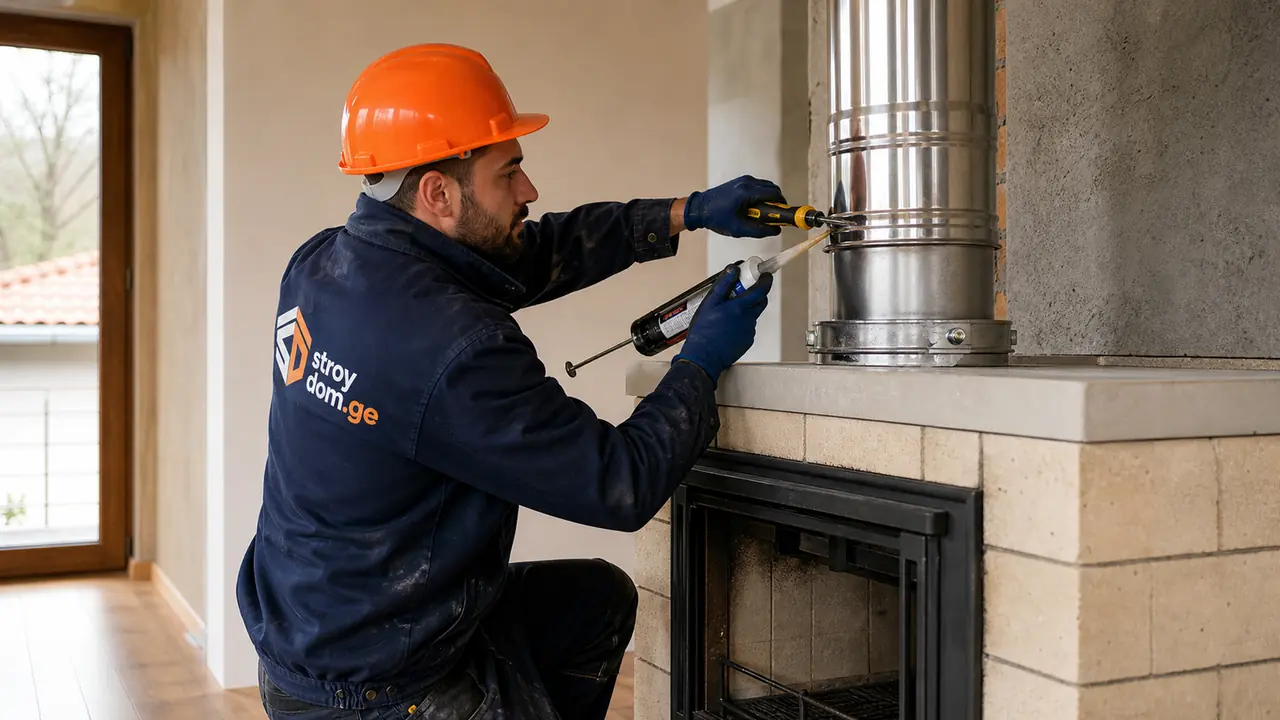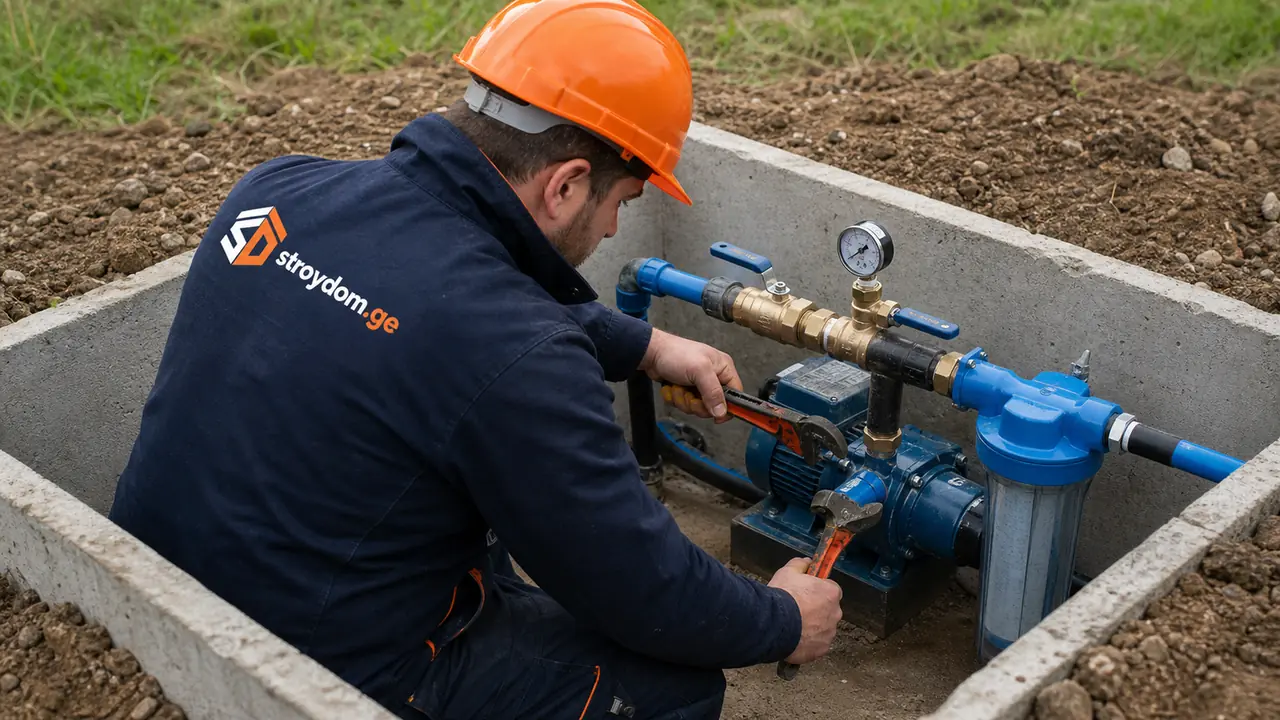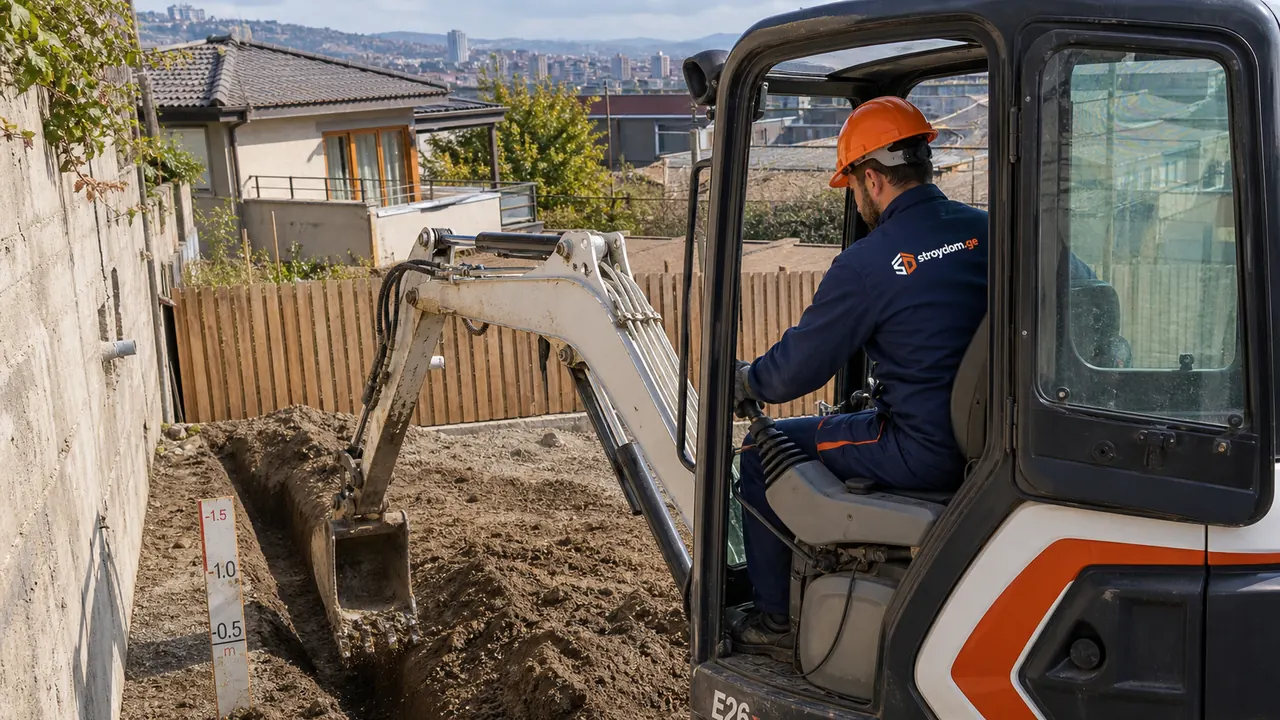
Earthworks and drainage
Earthworks from stroydom.ge are carried out in Tbilisi and across Georgia as a standalone order or as part of a house project: on turnkey builds the groundworks are fixed in the estimate before work starts. Excavation by machine costs 18–32 GEL/m³, by hand in restricted conditions 65–110 GEL/m³. Spoil removal is 22–38 GEL/m³. Perimeter and ring drainage in geotextile and stone costs 45–75 GEL per linear metre, an inspection chamber from 350 GEL. A service trench with sand bedding is 25–45 GEL per linear metre, and a septic installation 1200–2500 GEL. Warranty up to 10 years on full-cycle work.
We carry out earthworks in Tbilisi and across Georgia: excavation of foundations and trenches, site grading, perimeter and ring drainage, installation of septic tanks and holding tanks, and trenching for water, sewerage and electrical services.
Available as a separate order from 1,000 GEL
We take this work as a standalone order from 1,000 GEL, or as part of a turnkey house project. Inside a house project one contractor answers for the whole chain of work: one estimate and one warranty.
About the work
How does stroydom.ge deliver earthworks and drainage?
Groundworks: excavation, grading, drainage and external services.
What is included in earthworks and drainage?
Excavation
Machine excavation to level with hand trimming of the formation.
Site grading
Cut and fill, falls away from the house, compaction in layers.
Drainage
Perimeter and ring drainage in geotextile, chambers and outfall.
Septic and water
Tank installation, borehole or mains connection, insulation and pipe falls.
Service trenches
Trenches for water, drainage, gas and power with sand bedding.
What is earthworks and drainage and why is it needed?
Groundworks are invisible in a finished house, yet they decide whether the basement stays dry and whether the foundation moves. Mistakes here can only be corrected by digging out a completed building. So we work to levels, control compaction and solve drainage before any concrete goes in.
What stages does earthworks and drainage consist of?
Each stage runs only after the previous one is accepted — so hidden works are never "closed" before inspection, and a mistake never has to be hunted for through screed and plaster.
- 1
Setting out
Grid lines, formation levels, tie-in to the site topography.
- 2
Topsoil strip
Stored separately for later landscaping.
- 3
Excavation
Machine dig to level, hand trimming of the formation to design depth.
- 4
Formation layer
Sand and crushed stone blinding compacted in layers.
- 5
Drainage
Pipe in geotextile and stone falling to chambers, rodding points at corners.
- 6
Service trenches
Water, drainage and power with sand bedding, below frost depth.
- 7
Septic and tanks
Tank set, pipework connected, falls checked, protection against flotation.
- 8
Backfill
In compacted layers, levels graded away from the house, apron prepared.
How does stroydom.ge control quality on site?
How we work on site — materials, equipment, tolerances, documentation and acceptance of hidden works.
Levels by instrument
Formation levels and pipe falls are set with instruments: a 2 cm per metre drainage fall is not eyeballed.
Geotextile in drainage
Without a wrap the stone silts up within a couple of seasons and the drain stops working.
Compaction in layers
Backfill in 20–30 cm layers; otherwise you get settlement and cracked aprons.
Photo record
Drainage, blinding and service routes are photographed before backfill: afterwards nobody can check.
Spoil measured
Removal volume is estimated and confirmed by load counts, not "about five truckloads".
What should be accounted for in Tbilisi and Georgia?
What we account for here: seismic intensity 8 (MSK-64), hot summers and damp winters, steep terrain, older stock with timber floors and worn city networks.
Tbilisi clays
Water does not soak away. Drainage and managed run-off are essential, and septic soakaway fields do not work.
Slopes
On a slope water arrives from above: a cut-off ditch and ring drainage uphill of the house are required.
Dense neighbourhoods
In the old town machinery access is limited, so mini plant or hand digging is priced in advance.
Storm peaks
An open excavation fills within hours in the rainy season. Programmes are set so the formation is never left open.
Service depths
Water pipes go below frost depth or are insulated: rarely an issue in Tbilisi, always one in the mountains.
How much does it cost and how long does it take?
Indicative price ranges in lari (₾) for standard conditions. The final estimate is fixed after measurements and specification approval.
| Item | What is included and the price |
|---|---|
| Guide prices (Tbilisi, before survey) | The figures below are a working guide for budgeting. The firm estimate follows a site visit and survey: scope, access and substrate condition all move the price. |
| Excavation | By machine: 18–32 GEL/m³; by hand in restricted conditions: 65–110 GEL/m³. |
| Spoil removal | 22–38 GEL/m³ including haulage within Tbilisi. |
| Drainage | Perimeter and ring drainage in geotextile and stone: 45–75 GEL per linear metre; inspection chamber: from 350 GEL. |
| Service trenches | Trench with sand bedding for water or drainage: 25–45 GEL per linear metre. |
| Septic system | Installation with connections and anti-flotation measures: 1200–2500 GEL excluding the tank. |
| How we price | By volume: excavation per m³, cartage, blinding, drainage per linear metre, septic and services as separate items. |
| What drives the price | Soil type, depth and volume, machinery access, haul distance, presence of groundwater. |
| Within a house budget | On turnkey builds groundworks are among the first estimate lines and are fixed before work starts. |
| Confirmed on site | Machinery access and the actual soil type change the price more than anything else. |
| Terms | Fixed estimate in GEL, staged payments, a warranty in the contract (up to 10 years on full-cycle work). |
Updated:
Ready to estimate?
Leave a request — engineer site visit, measurement and a preliminary estimate for "earthworks and drainage" are free.

Planning to build a house?
Start with a free consultation about your plot, floor area and budget. If you are still looking for land, tell us about a plot you are considering.
We will call within an hour, 24/7. You do not need drawings for the first conversation.
By submitting the form you agree to personal data processing. Privacy Policy
Frequently asked questions — Earthworks and drainage
Is drainage needed if the plot looks dry?
A plot looks dry in summer. Most Tbilisi soils are clay and loam that barely pass water: after heavy rain it collects at the foundation and stands there for weeks. Drainage is needed if the plot is on a slope, if there is a basement, or if groundwater rises in spring. Ring drainage while the excavation is open costs a fraction of digging out a finished house later.
What is wrong with backfilling "as it comes"?
Trenches are often backfilled with the same soil and no compaction. A year later that fill settles, the apron cracks, the path by the house sinks, and water runs straight to the foundation through the loose material. The correct way is 20–30 cm layers with compaction, and a top layer of clay or sand depending on the drainage design.
How do you choose a septic system in Georgia?
By the number of permanent residents and by the soil. On sandy soils a septic tank with a soakaway field works; on clay it does not, so you need a sealed holding tank emptied by tanker, or a biological treatment plant discharging to a ditch. Choosing without testing the soil is why a system stands full after six months.
When can you not excavate?
In heavy rain and on saturated ground: the sides slump, the formation turns to mud and concrete cannot be poured on it. Winter excavation is possible but frozen ground is slower and more expensive. Ideally you dig in a dry window with enough time before concreting so the formation is not left open under rain.
What happens to the excavated soil?
Topsoil is stripped separately and kept on site for later planting. The rest goes partly into backfill and grading, and the surplus is removed. The volume to be carted away is calculated up front and included in the estimate: on a slope there is often several times more surplus than on a flat plot.
Can it be dug by hand where machinery cannot reach?
Yes, and in dense Tbilisi neighbourhoods it is common: narrow old-town streets, plots with no access. Hand excavation is slower and dearer but feasible; sometimes mini machinery that fits a 1.5 m gap is used. The method is decided on the site visit, before the estimate, so the price does not change mid-project.